
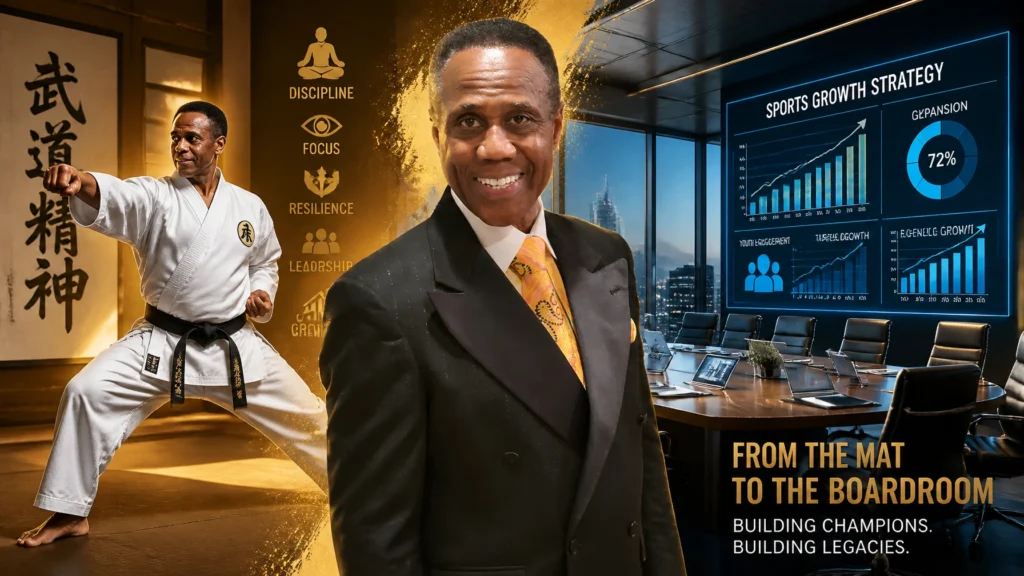
The landscape of martial arts is changing faster than a black belt’s roundhouse. It’s May 2026, and if you’re still running your academy the same way you did five years ago, you’re not just behind: you’re invisible.
For decades, the "Manual Operator" was the hero of the story. You know the type: the head instructor who cleans the mats, answers the phones, teaches six classes a night, and balances the books at 11:00 PM. But as we look at the industry today, that model has hit a ceiling. To scale in this new era, you have to transition from being the primary technician to becoming a Strategic Architect.
This shift isn’t just about making more money; it’s about creating a legacy that outlasts your time on the mat. It’s about moving from a local gym to a cornerstone of your city’s sports culture.
The Strategic Architect: Systems Over Sweat
The biggest hurdle for school owners is the fear of "stepping off the mat." There’s a common misconception that if the founder isn't teaching every class, the quality will drop. In reality, the most successful academies in 2026 are those built on repeatable systems.
Being a Strategic Architect means you are building a machine that runs whether you are in the building or not. This involves:
- Standardized Curriculum: Ensuring every student gets the same high-level experience, regardless of which instructor is on the floor.
- Instructor Development Paths: Turning your best students into your best staff members using a clear, incentivized growth track.
- Operational Playbooks: Documenting everything from how the front desk greets a prospect to how the mats are sanitized.
When you stop being the "doer" and start being the "designer," you gain the clarity needed to see the bigger picture: like how your school fits into the burgeoning world of professional leagues.
Leveraging Frictionless Tech and AI

In 2026, convenience is the ultimate currency. If your onboarding process involves a paper waiver and a "we'll call you back," you're losing students to the studio down the street that uses AI.
We are seeing a massive trend toward frictionless technology. Tools inspired by platforms like BJJLink and modern CRM systems are now using AI to handle the heavy lifting. Imagine an AI assistant that handles 90% of your initial inquiries, schedules tours, and follows up with "no-shows" without you lifting a finger.
Why this matters:
- Reduced Churn: AI can flag when a student hasn't checked in for three days and send a personalized "we miss you" message instantly.
- Seamless Onboarding: A new student should be able to sign up, pay, and watch a "First Day" orientation video all from their phone before they even step foot in your lobby.
- Data-Driven Decisions: You can see exactly which marketing channels are driving the most high-value members, allowing you to spend your budget where it actually works.
Technology shouldn't replace the human touch of martial arts; it should remove the administrative friction so you can focus on what matters: the people.
The Martial Arts School as a 'Third Space'

Sociologists talk about the "Third Space": a place that isn't home (the first space) and isn't work (the second space). It’s a community hub where people find belonging. In an increasingly digital world, the martial arts academy has become one of the last true Third Spaces.
Success in 2026 isn't just about how many world champions you produce; it's about the culture you curate. Your academy should be a place where:
- A CEO and a college student bow in as equals.
- Families feel safe and supported.
- The "vibe" after class is just as important as the training during class.
By positioning your school as a community hub, you increase student lifetime value. People don't quit their community; they only quit their gym. When you build a Third Space, you aren't just selling kickboxing: you're selling a sense of home.
Connecting Local Success to a Global Vision: The NMAL

This is where the vision gets big. The local success you build as a Strategic Architect is the foundation for something much larger: the professionalization of our sport.
At Dexter V. Kennedy, we believe the future of martial arts lies in city-based professional leagues. The National Martial Arts League (NMAL) is the blueprint for this transition. Imagine your top students having a clear path from your local mat to a professional city-based team, competing in arenas with the same prestige as the NFL or NBA.
When your school is run with boardroom-level precision, you become more than just a "karate teacher." You become a potential franchise owner, a scout, and a leader in a multi-billion dollar sports industry. The professionalization of martial arts requires academy owners who think like owners, not just practitioners.
Your Blueprint for the Future

Transitioning from the mat to the boardroom doesn't happen by accident. It requires a specific game plan. Dexter V. Kennedy has spent years documenting this exact journey, providing the strategic insights needed to navigate the intersection of martial arts and high-level business.
If you’re ready to stop spinning your wheels and start scaling your vision, the resources are already waiting for you.
Recommended Reading for the Strategic Architect:
- Taking on the NFL: The National Martial Arts League: The definitive vision for how martial arts will compete on the world stage of professional sports.
- Team Point Fighting Investors Game Plan: A must-read for those looking to understand the financial and structural side of team-based martial arts.
- The Full Collection of Point Martial Arts Books: From technical mastery to leadership development.
The Time to Scale is Now
The year 2026 is a threshold. The manual operators of the past are being replaced by the visionary architects of the future. By leveraging technology, fostering community, and aligning your business with the growth of professional leagues like the NMAL, you aren't just running a school: you're building a legacy.
Visit the Dexter V. Kennedy Blog for more insights on martial arts innovation, leadership, and the future of our industry. Let’s take it from the mat to the boardroom together.


