
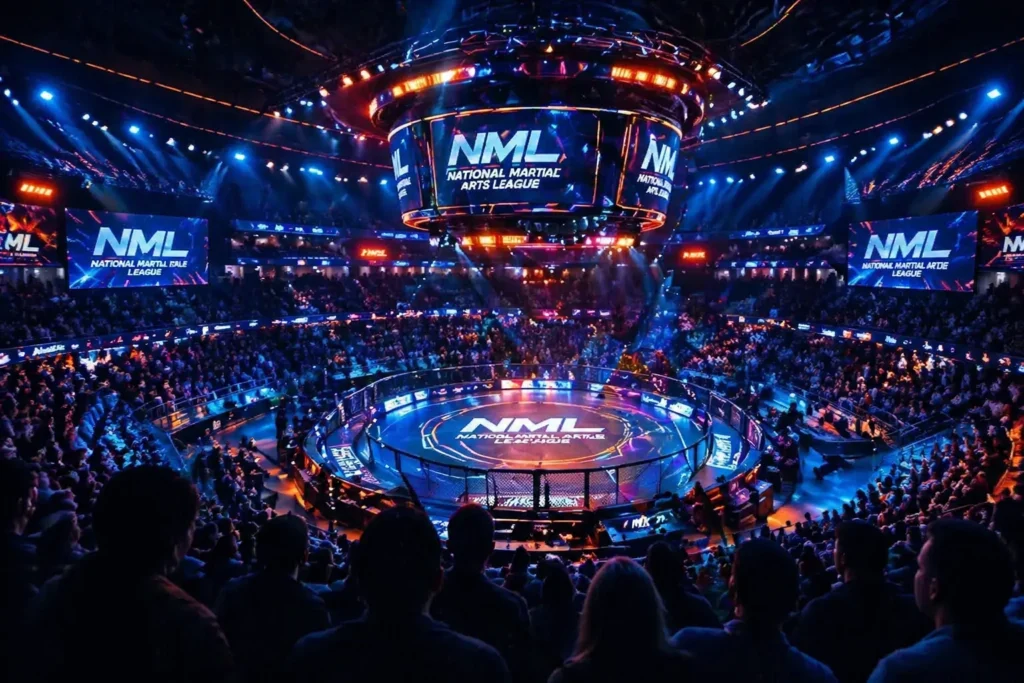
The world of sports investment is no longer limited to the "Big Four." While the NFL, NBA, MLB, and NHL have long dominated the conversation, savvy sports entrepreneurs are looking for the next frontier. Today, that frontier is martial arts innovation.
Combat sports have seen a meteoric rise over the last two decades, but the industry is still in its relative infancy regarding professionalized league structures. At DexterVKennedy.com, we believe the next evolution isn't just about individual matches: it's about a professional martial arts league built on a sustainable, scalable team model.
If you’re looking for a sports investment that combines tradition with modern business scalability, here are 10 things you need to know about the future of professional martial arts.
1. The Global Market is Massive (and Growing)
The global martial arts industry is estimated to exceed $80 billion. Millions of practitioners around the world compete in traditional point-sparring formats across karate, taekwondo, and related systems, yet there has historically been a lack of a centralized, professional league structure built specifically for them. That makes Professional Point Martial Arts a compelling investment category: it serves a massive, loyal, and underserved market that already understands the sport, values technical skill, and is ready for a more visible professional platform.
2. Moving from Fragmented Events to a League Structure
Historically, martial arts has been a "fragmented" industry. Point-sparring tournaments happen independently, rules vary by organization, and fans often find it hard to follow a consistent narrative. Martial arts innovation is changing this by creating a unified league format for Professional Point Martial Arts. Instead of one-off events, a league offers a structured season, playoffs, and a championship: models that have been proven to drive long-term fan engagement and reliable broadcast schedules while making a technical sport easier for fans, sponsors, and media partners to follow.
3. The Power of the City-Based Team Model

One of the most exciting aspects of our vision at Dexter V. Kennedy is the city-based team model. By assigning teams to specific cities, you leverage local pride in a way that instantly makes the league more relatable and more marketable. Names like the Philadelphia Ten Tigers and the Dallas Snake Fist Clan give fans something concrete to rally behind. Instead of asking audiences to follow only individual martial artists, this structure gives them a hometown identity, a banner, and a reason to stay invested throughout a full season. This model is the secret sauce behind the multi-billion dollar valuations of traditional sports franchises, and it's coming to martial arts.
4. Scalability: The 32-City Blueprint
A professional league isn't just a handful of local clubs; it's a national (and eventually international) infrastructure. Our vision involves a 32-city league, creating a massive footprint for growth. This scale allows for regional rivalries, national media deals, and a robust pipeline of talent from grassroots schools to the professional stage. For an investor, this represents a scalable business model with a clear path to expansion.
5. Multiple Revenue Streams

A Professional Point Martial Arts league doesn't just rely on ticket sales. In the modern sports economy, revenue is diversified, especially when the product is safe, technical, and highly marketable to families, schools, and mainstream sponsors. Investors and team owners can look forward to:
- Media Rights: Selling broadcast and streaming rights to platforms that want fast-paced live sports with broad audience appeal.
- Sponsorships: Opportunities for brand partnerships at both the league and team levels, especially from companies that prefer a safer alternative to MMA.
- Merchandise: Team-specific apparel and equipment tied to city identity and martial arts culture.
- Digital Platforms: Fan engagement through apps, memberships, and interactive content built around rankings, team rivalries, and athlete personalities.
6. Standardization and Professionalism
One of the biggest hurdles to martial arts as a mainstream professional sport has been the lack of standardization. Professionalizing Professional Point Martial Arts means creating uniform rulesets, professional officiating, and corporate-level management around a format that highlights speed, precision, control, and technique rather than excessive damage. This "corporate" approach makes the sport more palatable for mainstream advertisers and institutional investors who require stability, predictability, and a safer product than MMA for broad commercial adoption.
7. Ground Floor Opportunity for Sports Entrepreneurs
In the world of the NFL or NBA, the "buy-in" for a team is often in the billions. For the emerging professional martial arts league, we are currently at the "ground floor." This is the time for sports entrepreneurship to shine: allowing visionary leaders to secure team ownership and intellectual property before the valuations skyrocket.
More importantly, this is no longer just a concept on paper. Teams in Houston (7 Clans of Kung Fu), Las Vegas (Venom Squad), Charlotte (Five Animas), and Raleigh (Eight Law Masters) are already Under Contract, which signals real-world traction and early proof of concept for serious investors watching the space. And the reach is growing. The official NMAL team list at The National Martial Arts League Teams shows a broader city-based footprint that supports the league's expansion story and strengthens the case for getting involved early.
8. Intellectual Property and Brand Building

In a league model, the value is in the intellectual property. Whether it's the league branding, the team logos, or the proprietary tournament formats like those discussed in the Kumite Sport framework, these are assets that appreciate over time. Building a brand in this space means creating a legacy that extends far beyond a single fight night.
9. Bridging the Gap: Martial Arts & Traditional Sports Marketing
The future of martial arts isn't just in the dojo; it's in the sports bar, on the television screen, and in the stadium. Professional Point Martial Arts has a unique advantage here: it can be positioned as a safer, cleaner, and more technical alternative to MMA without losing competitive intensity. By applying traditional sports marketing strategies to point-based combat, we can bridge the gap between "niche martial arts fans" and "general sports fans" while also unlocking a huge built-in audience of traditional point-sparring competitors who have been underserved for years. This expansion of the target demographic is what will drive the next decade of growth in the industry.
10. The Vision of Dexter V. Kennedy

At the heart of this movement is a clear vision. Dexter V. Kennedy has spent years documenting a professional future built around Professional Point Martial Arts: a safe, highly-marketable, and technical alternative to MMA that can reach a wider audience while serving the massive existing base of traditional point-sparring competitors. To truly understand the mechanics of this investment and the strategic roadmap for the industry, you need to dive into the literature that started the conversation.
If you are serious about sports investment, we highly recommend starting with these two foundational resources:
- Taking on the NFL: The National Martial Arts League: A deep dive into the vision of creating a league that can compete on the world stage.
- Team Point Fighting Investors Game Plan: The essential guide for anyone looking to understand why point fighting offers one of the strongest commercial opportunities in the future of professional martial arts.
Conclusion: Are You Ready to Lead?
The professionalization of martial arts is inevitable. The question is whether you will be an observer or an owner. By building around Professional Point Martial Arts as a safe, highly-marketable, and technical alternative to MMA, we are creating something truly unique for investors and for the underserved traditional point-sparring community.
To learn more about the man behind the vision, visit our About Page or browse our full collection of Books and Resources. The future of professional martial arts leagues is being written right now( make sure you're a part of the story.)


