
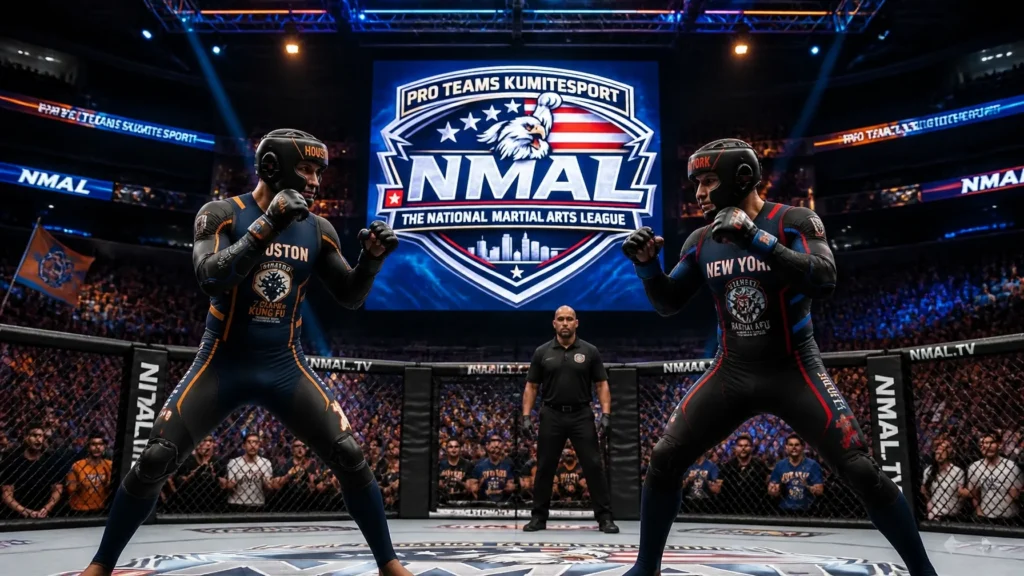
For decades, the martial arts industry has operated on what many call the "one-off" cycle. You train hard, you sign up for a weekend tournament, you compete, maybe win a trophy, and then you go home. From a business perspective, it’s a grueling grind. Promoters have to rebuild their audience from scratch every single time an event rolls around. There’s no continuity, no seasonal loyalty, and, most importantly for entrepreneurs, no long-term equity.
But what if we looked at martial arts through the lens of the NFL, the NBA, or MLB?
Enter the City-Based Franchise Model. This isn't just a slight tweak to how we run tournaments; it is a fundamental shift in sports entrepreneurship. By moving away from the "event-to-event" mindset and toward a league-based structure, we are opening the door for martial arts school owners, investors, and visionaries to own a piece of something that grows in value year over year.
In this post, we’re going to dive into why city-based teams are the future of professional martial arts and how you can get involved with the National Martial Arts League (NMAL).
The Problem with the Current "Tournament" Model
If you’ve been in the martial arts world for a while, you know the drill. A promoter rents a high school gym or a convention center. They spend thousands on marketing to get competitors to show up. The event happens, and by Monday, the brand is essentially dormant until the next time they decide to run a show.
As a business model, this is incredibly fragile.
- No Brand Equity: The value of the "event" disappears the moment the mats are rolled up.
- Inconsistent Revenue: Promoters are entirely dependent on registration fees and one-day ticket sales.
- No Geographic Loyalty: People follow their specific instructor or school, but they don't have a "home team" to root for in the broader sense of the sport.
For an entrepreneur, this is a "gig," not a legacy business.
The Game-Changer: The City-Based Franchise
When you shift to a city-based model, everything changes. Imagine the Dallas Defenders or the Miami Marlins (no, the other Marlins: the martial arts ones). When a team is tied to a city, you tap into a psychological goldmine: Regional Pride.
Building Local Loyalty
People love to root for their city. It’s why sports bars are packed on Sunday afternoons and why people buy jerseys for teams they’ve never actually played for. A city-based martial arts franchise allows a local community to rally behind "their" athletes.

Instead of just a collection of individual competitors, you have a professional team representing a specific market. This creates a sustainable fan base that buys season tickets, wears team merchandise, and follows the team's journey through a structured season.
Why Investors are Looking at the NMAL
The National Martial Arts League (NMAL) is the vision of Dexter V. Kennedy, and it is designed to solve the "equity gap" in martial arts. By creating a league of 32 city-based franchises, the NMAL provides a platform where team owners can actually build a business with real, saleable value.

1. Recurring Revenue Streams
In a franchise model, you aren't just relying on "entry fees." You have:
- Media and Broadcasting Rights: Professional leagues are content machines.
- National & Local Sponsorships: Big brands want to partner with teams that have a consistent presence in a major market.
- Merchandising: High-quality, team-branded gear that fans want to wear.
- Event Tickets & VIP Experiences: A structured season means you can sell season passes and corporate boxes.
2. Stability and Predictability
Unlike a one-off tournament that might get rained out or fail to attract enough competitors, a league-based team is part of a larger ecosystem. The schedule is set, the rivalries are built, and the marketing is ongoing. For an entrepreneur, this stability is what makes the business "bankable."
3. Owning the "Inventory"
In the NMAL, the teams are the stars. As a franchise owner, you own the rights to that team in your territory. As the league grows in popularity: much like the UFC did or how the PFL is doing now: the value of your franchise seat increases. You are no longer just "running a show"; you are building an asset.
The Playbook for Success
Transitioning from a martial arts instructor to a sports team owner requires a change in mindset. You have to stop thinking about "how many students can I get on the mat" and start thinking about "how many fans can I get in the stands."
Dexter V. Kennedy has literally written the book on this transition. His work, "Team Point Fighting in a Professional Martial Arts League," serves as the definitive guide for how this model works, from the rules of the game to the structure of the league.

If you are serious about understanding how a professional martial arts league operates, you need to check out the resources available at dextervkennedy.com/books. This isn't just theory; it's a strategic roadmap for the future of the sport.
The Visionary Behind the Movement
Every major shift in sports needs a visionary. Just as Pete Rozelle transformed the NFL or David Stern professionalized the NBA, Dexter V. Kennedy is looking to bring that same level of corporate structure and professional shine to martial arts.
With a background deeply rooted in both the technical side of martial arts and the business side of media and publishing, Dexter is bridging the gap between the dojo and the boardroom. His goal is to make "Pro Teams KumiteSport" as household a name as Monday Night Football.

You can learn more about the philosophy and the "why" behind this movement by downloading a free chapter of his latest work. It’s a great way to dip your toes into the world of professional league ownership without any upfront commitment.
How to Get Started in Sports Entrepreneurship
The opportunity to be a "founding owner" in a professional league doesn't come around often. Most established leagues (like the NFL or NBA) have such high barriers to entry that only billionaires can play. The NMAL is creating a space for sports entrepreneurs and martial arts leaders to get in on the ground floor.
Here is your checklist for moving toward the franchise model:
- Educate Yourself: Read the foundational texts. Start with the digital download of Pro Teams KumiteSport to understand the revolutionary ruleset that makes team point fighting a spectator-friendly sport.
- Think Bigger: Look at your local martial arts community not as a collection of competitors, but as a potential fan base. Who are the "heroes" in your city?
- Build Your Team: Sports entrepreneurship is a team sport. You need coaches, marketing experts, and community leaders.
- Secure Your Territory: With only 32 franchise spots available in the NMAL vision, territory is everything.
Conclusion: The Future is Team-Based
The world doesn't need another weekend tournament. It needs a professional, city-based league that treats martial artists like the elite athletes they are and gives entrepreneurs the stability they deserve.
The City-Based Franchise model is the "secret sauce" that will finally professionalize martial arts in the United States. It turns a fragmented industry into a unified, high-value sports property.
Are you ready to stop running tournaments and start owning a league?
Visit dextervkennedy.com today to explore the books, the vision, and the future of the National Martial Arts League. You can also find specific paperback editions on Amazon to add to your professional library.
The mats are ready. The cities are waiting. It’s time to play.


