
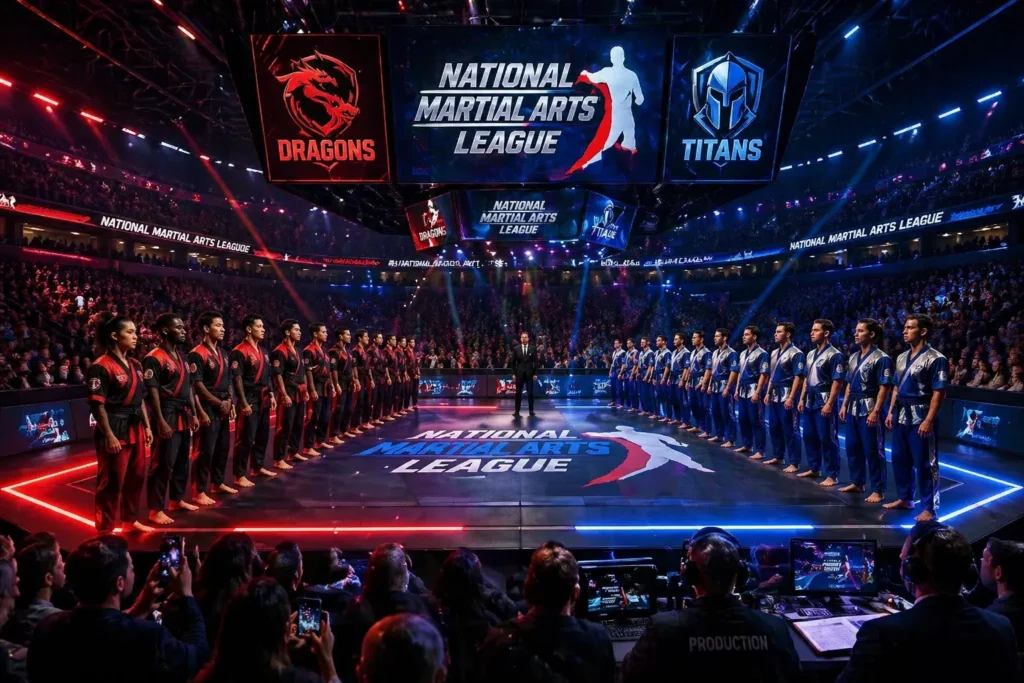
For over 75 years, the martial arts world has operated on a very specific, very traditional rhythm. On any given Saturday, thousands of athletes pile into high school gyms or hotel ballrooms for "The Tournament." They wait for hours to fight for three minutes, often in front of a handful of family members, hoping to walk away with a plastic trophy and some fleeting recognition.
But as we look toward the future of professional sports, a hard question is emerging: Are traditional tournaments dead?
While the spirit of competition remains as strong as ever, the structure of that competition is reaching its expiration date. The individual-focused, "one-and-one" tournament model is fragmented, difficult to monetize, and lacks the tribal loyalty that drives modern sports like the NFL or NBA.
The future isn't just about who is the best individual fighter; it’s about who has the best team. Enter the National Martial Arts League (NMAL): a revolutionary, city-based professional league that is changing the game for athletes, fans, and investors alike.
The Problem with the "One and Done" Model
Traditional tournaments are essentially a series of isolated events. Once the weekend is over, the momentum disappears. For school owners and instructors, these events are often a financial drain rather than a revenue driver. They require immense logistics for very little long-term business sustainability.
From an investor's perspective, traditional martial arts competition is a nightmare to scale. There is no recurring fan base, no localized "home team" to root for, and no consistent media presence. Without these elements, it’s nearly impossible to secure the level of sponsorships and media rights that other professional sports enjoy.
The NMAL Revolution: From Individuals to Icons
The National Martial Arts League, founded by Dexter V. Kennedy, is flipping the script. Instead of thousands of individual competitors floating in a void, the NMAL is built on a professional, city-based team structure.
Imagine the energy of a professional basketball game, but on the martial arts mat. This isn't just about points; it's about identity.

The Power of Localized Tribes
By grounding competition in cities, the NMAL creates an immediate, "tribal" appeal. Look at the emerging rivalries already heating up:
- Atlanta’s Red Fist Clan: Bringing the heat and soul of the South to the mat.
- San Francisco’s 36th Chamber: A team built on technical precision and West Coast innovation.
When you have a city-based team, you don't just have a competitor: you have a community. Fans in Atlanta don't just watch a random match; they cheer for the Red Fist Clan. This localized loyalty is the bedrock of professional sports success. It drives ticket sales, merchandise, and a level of fan engagement that individual tournaments can never replicate.
A Sustainable Business Model for the Modern Era
One of the biggest hurdles for martial arts school owners has always been creating a pathway to professional-level success for their students that also supports their own business. The NMAL model provides that bridge.

For school owners, the NMAL offers a more sustainable business opportunity. Instead of sending students to one-off tournaments where they might get lost in a sea of brackets, owners can align with a league that values professional presentation, media rights, and long-term brand building.
For investors, the NMAL represents a ground-floor opportunity in an $80 billion global industry that has, until now, lacked a cohesive professional structure. With 32 markets and a blueprint designed for television and digital streaming, the league is built for the modern media landscape.
The Visionary Behind the League
The shift toward a professional team-based league isn't happening by accident. It is the result of years of strategic planning and vision from Dexter V. Kennedy. As a 5th Degree Black Belt and a seasoned entrepreneur, Kennedy recognized that for martial arts to reach the next level, it had to stop acting like a hobby and start acting like a professional sport.

Kennedy’s vision is captured in his groundbreaking books, which serve as the "Playbooks" for this new era. Whether you are a fan, a school owner, or a potential team owner, these resources are essential reading:
- Taking on the NFL: The National Martial Arts League: A deep dive into the philosophy and structural changes needed to elevate martial arts to a major league level.
- Team Point Fighting: Investors Game Plan: The financial and strategic blueprint for those looking to capitalize on the professionalization of the sport.
Why Team-Based is the Only Path Forward
Traditional tournaments will always have a place in the grassroots development of martial arts. But for the sport to grow, it needs the NMAL.
The team-based model solves the three biggest problems in martial arts competition:
- Fragmented Audience: It unites fans under a city banner.
- Sustainability: It creates consistent revenue streams through sponsorships and media.
- Pathways: It gives athletes a professional career path, not just a trophy.

Join the Revolution
The martial arts industry is at a crossroads. We can continue with the status quo: hundreds of small, unconnected events that struggle for attention: or we can embrace the professional, team-based future of the National Martial Arts League.
Whether you are a martial artist looking for a higher stage, a school owner looking for better opportunities, or an investor seeking the next big thing in sports, now is the time to get involved.
Explore the full vision and pick up the blueprints for the future at DexterVKennedy.com. The era of the "lone wolf" tournament is ending. The era of the team has begun.


