
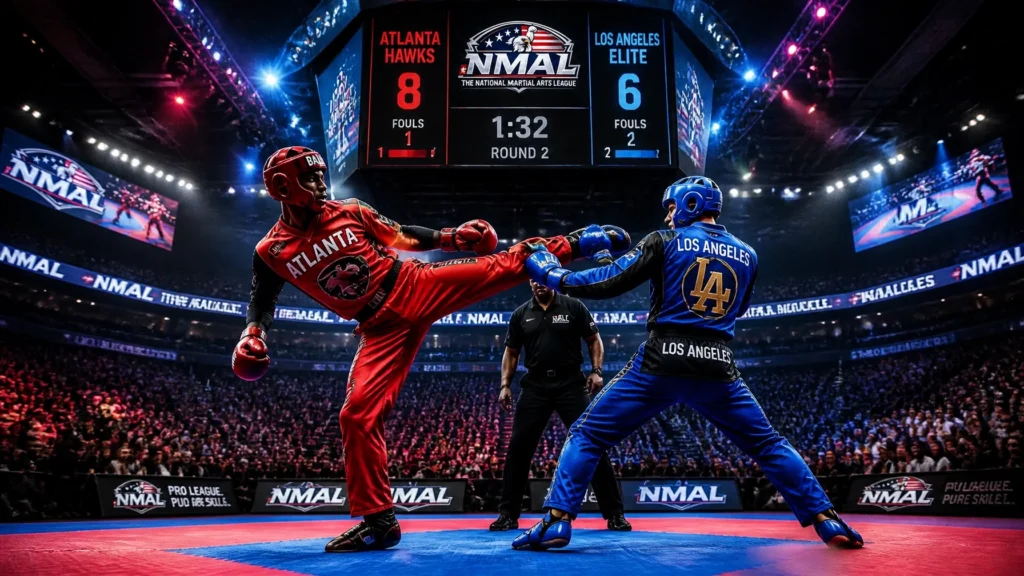
Hey there! Dexter here. If you’ve been in the martial arts world as long as I have, you’ve probably noticed something a bit… messy. We have incredible athletes, world-class discipline, and a fan base that is absolutely rabid for the sport. But when you look at the "business" of martial arts, it feels like we’re still stuck in the 1970s.
I first realized this back in the early 90s. I had just returned home from serving in Desert Storm, and like any martial artist, I was eager to get back on the circuit. But when I looked around, something didn't sit right. At every tournament I went to, there was a "World Champion." Then I’d go to the next town, and there was another one. By the end of the year, I felt like I’d met 100 different "champions." If everyone is a champion, does the title actually mean anything? That was the spark that led me to realize that without standardization, our sport would always be a fragmented hobby instead of the billion-dollar powerhouse it deserves to be.
The Fragmentation Trap: Why "100 Champions" is a Zero-Sum Game
In the current landscape of martial arts, specifically point fighting and kumite, the lack of a unified governing body and standardized ruleset is the single biggest barrier to entry for the mainstream public. Imagine if you sat down to watch a football game, but in this specific stadium, a touchdown was worth 8 points, and you weren't allowed to tackle below the waist. Then, next week, you watch a different game where a touchdown is worth 4 points and the field is only 50 yards long.
You’d change the channel in five minutes.
This is the "Fragmentation Trap." Currently, tournament promoters operate as islands. Each has their own set of rules, their own weight classes, and their own criteria for what constitutes a point. For the hardcore practitioner, this is an annoyance. For the casual fan and the big-money investor, it’s a deal-breaker. When the rules are constantly shifting, the sport loses its "legitimacy" in the eyes of the public. Standardization isn't about removing the art from martial arts; it’s about creating a language that the rest of the world can understand.

Why Rules are the Key to Billions
If you look at the most successful sports leagues in the world: the NFL, the NBA, the English Premier League: they all share one common trait: a rigid, universal set of rules. These rules allow for the creation of statistics. Statistics allow for the creation of stars. Stars allow for the creation of massive media contracts and sponsorship deals.
When rules are standardized, the focus shifts from "How is this game played?" to "How well is this athlete playing the game?" This transition is where the money is.
Standardization leads to:
- Predictability for Broadcasters: Television networks need to know exactly how long a match will last and what the viewers are looking at.
- Fan Engagement: A fan in New York should be able to discuss a match in Los Angeles using the same terminology and understanding of the score.
- Gambling and Fantasy Sports: You cannot have a betting line or a fantasy league without a standardized points system. This is a multi-billion dollar industry that martial arts is currently leaving on the table.
In my book, Team Point Fighting in a Professional Martial Arts League, I dive deep into how we can take the raw energy of the tournament circuit and refine it into a product that rivals the major leagues. You can find more about this vision on our books page.
The National Points System: The Engine of Growth
The heart of the Professional Martial Arts League Blueprint is a unified National Points System. Currently, if an athlete wins a tournament in Florida, it may or may not help them if they compete in Ohio. We need a system where every point scored is part of a larger, national narrative.
Imagine a world where a "Blitz" is worth a specific amount of points regardless of whether you're fighting in a local dojo or a professional arena. This allows us to track "Point Leaders" over a season. It allows fans to follow the "MVP race." It turns a series of disconnected events into a cohesive season of professional sport.
When we standardize the points, we also standardize the officiating. One of the biggest complaints in martial arts today is subjective judging. By moving toward a professional league model with standardized, trained officials, we remove the "politics" and the "home-court advantage" that plagues so many local tournaments. We create a fair, transparent environment where the best athlete truly wins.

Blueprint for the Future: City-Based Teams
One of the most radical shifts proposed in the Professional Martial Arts League Blueprint is the move away from the "individual traveler" model toward city-based professional teams.
Traditional martial arts competitions are often lonely affairs. An athlete and their coach travel to a hotel ballroom, compete, and go home. This model is impossible to scale for a mass audience. People don't root for "Athlete X" as easily as they root for the "Baltimore Venom" or the "San Diego Strikers."
By grouping standardized athletes into city-based teams, we tap into regional pride. This is the secret sauce of the NFL's success. Even if you don't know every player on the roster, you root for your city. This team-based structure allows for:
- Local Sponsorships: Local businesses can get behind a team representing their community.
- Home and Away Games: Creating a regular schedule that fans can plan for.
- Team Merchandise: Building a brand that extends beyond the mat.
You can read more about how this structure works by downloading a free chapter of my work.
The Economic Reality: Investors Want Consistency
If you want to attract the kind of capital required to build a national league, you have to speak the language of the investor. Investors hate "variability." They love "scalability."
A fragmented sport with 100 different champions is a variable nightmare. A standardized league with a clear points system, a set schedule, and city-based franchises is a scalable asset. When I speak to potential team owners and investors, I show them the path from the hotel ballroom to the professional arena.
Standardization makes the sport "packageable." It allows us to sell "The Game" rather than just "The Event." This is the core message of my book Team Point Fighting in a Professional Martial Arts League. We are building an ecosystem where the school owner, the athlete, and the investor all win together.

The Path Forward
The "100 champions" problem isn't going to fix itself. It requires a fundamental shift in how we view our sport. We have to be willing to trade a bit of our local "autonomy" for the sake of a national "identity." We have the talent. We have the history. We have the passion. All we are missing is the blueprint.
The transition from a fragmented hobby to a billion-dollar professional league is not just a dream: it’s a necessity for the survival and growth of martial arts in the modern era. We need to stop fighting each other for the scraps of the local circuit and start building the table where the big players eat.

So, what do you think? Are you ready to see martial arts take its rightful place alongside the NFL and NBA? Whether you're a school owner looking to give your students a professional path, an athlete tired of the "trophy-only" circuit, or an investor looking for the next big thing in sports, there is a place for you in this vision.
Head over to dextervkennedy.com to see the full range of what we're building. You can grab the physical copies of my books on Amazon or get the digital blueprint for Pro Teams KumiteSport right here.
Let’s stop being "champions" of empty rooms and start being the pioneers of a new professional era.
Stay sharp,
Dexter V. Kennedy


